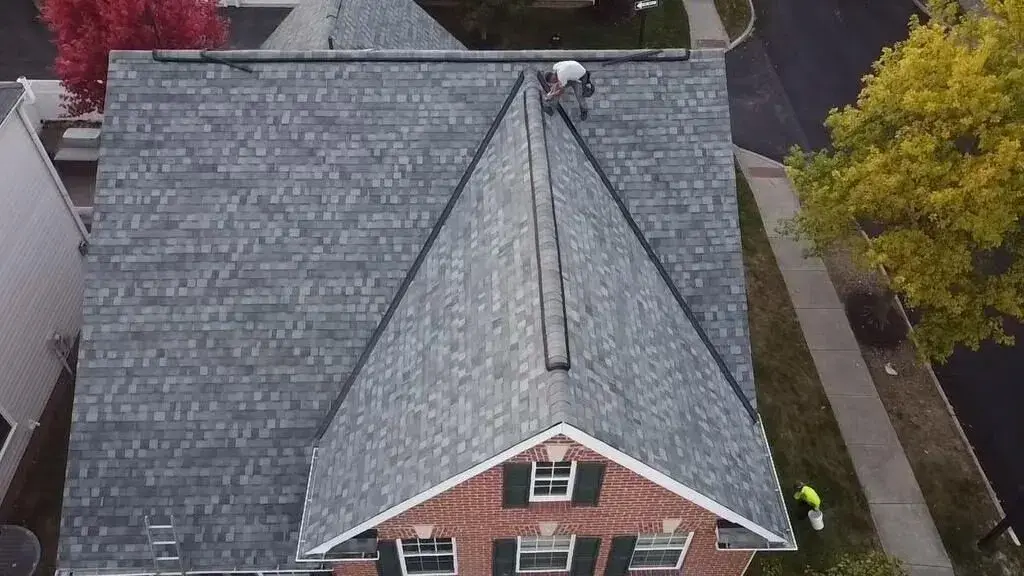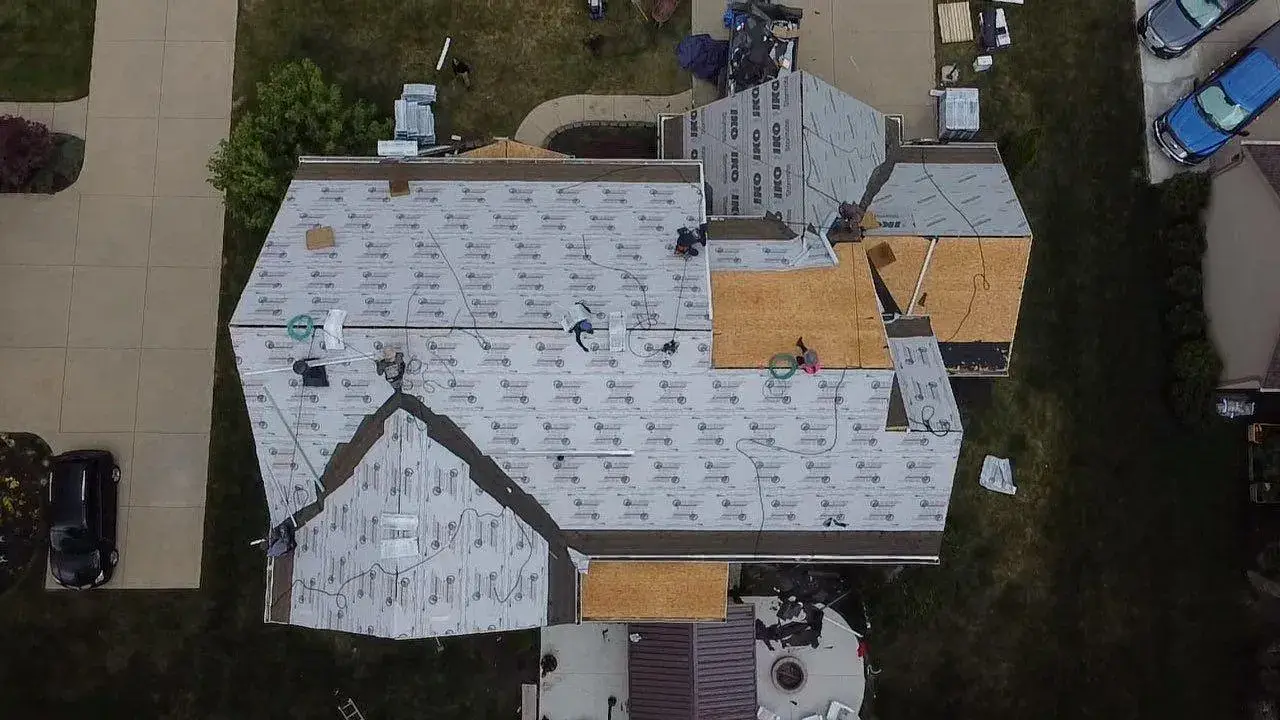

Right After the Storm
Please stay safe first. Keep clear of downed power lines — always treat them as live — and stay out of standing water near outlets. If you smell gas, get out and call the gas company. Don’t climb on a wet or damaged roof.
When it’s safe, take pictures from the ground of anything you can see: missing shingles, dented gutters, damaged siding, broken windows. Write down the date of the storm. If water is coming in, call us to tarp the roof.
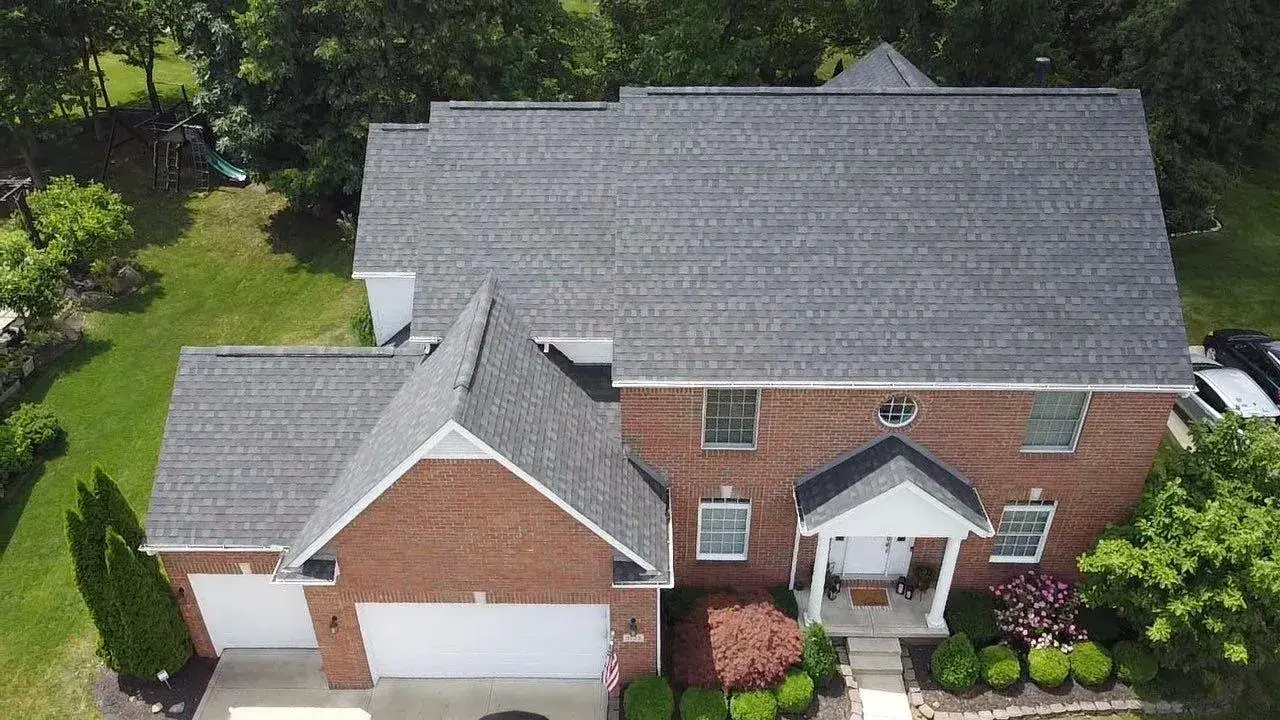
Spotting Hail and Wind Damage
Wind damage is usually easy to see — shingles lifted, creased or missing, often along the edges and ridge. Hail is harder. It leaves dark bruises where granules were knocked loose, cracked shingles, and dents in metal vents, flashing and gutters. Even damage that looks small can shorten the life of your roof and lead to leaks later on.
Working With Your Insurance Company
We document the damage with photos across the whole roof and put together a written summary of what we found. We’ll help you communicate with your insurer about the storm damage, and we can meet the adjuster at your home if you’d like us there.
Your insurance company makes the final decision on a claim. If we don’t think the damage is worth filing, we’ll tell you.
Putting It All Back Together
Storms rarely hit only the roof. Once your claim is settled, we can restore the roof, gutters and siding together, with one team and one point of contact.